



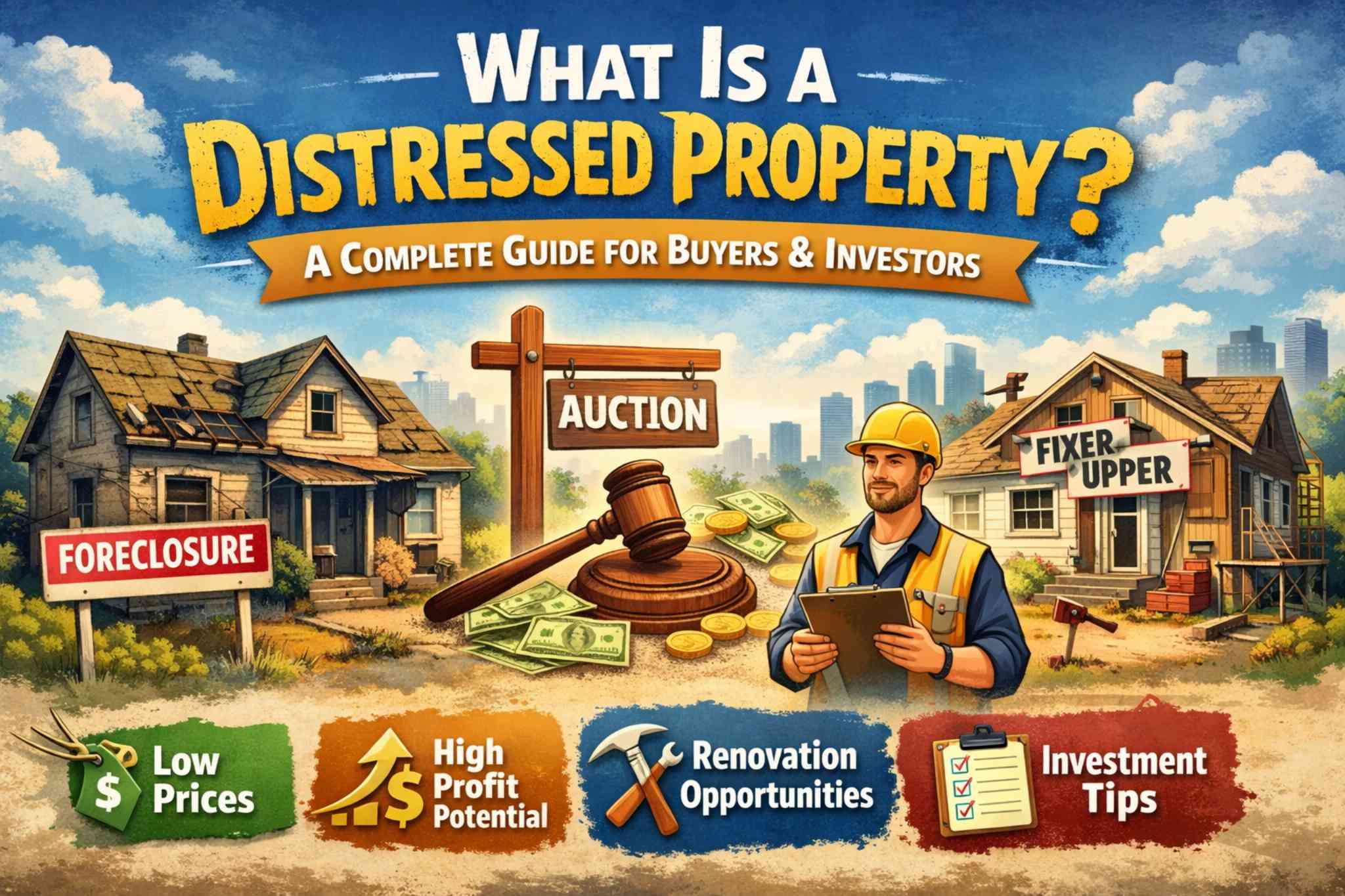
When you hear the term distressed property, you might think of an old, worn-out house or something in need of serious repair. That’s true, but distressed properties offer far more than just an opportunity to buy a house at a lower price. These properties are often undervalued, which opens the door for smart investors to make a significant profit.
If you’re wondering what a distressed property is, why they’re priced lower, and how you can take advantage of this market, you’ve come to the right place. This article will break it all down, so you can confidently decide whether investing in distressed properties is right for you.
What Exactly Is a Distressed Property?
A distressed property refers to a house or building that has some sort of problem, usually a financial or physical issue. These issues can range from unpaid mortgages to the home being in poor condition or requiring significant repairs. Distressed properties are typically sold at a lower price because of these issues, making them an attractive option for buyers and investors who are willing to take on the work and risk.
Here are the main reasons a property might be distressed:
- The homeowner is behind on mortgage payments, potentially heading into foreclosure
- The property has physical damage, such as a leaking roof, broken plumbing, or damaged foundations
- The property has legal or financial issues, like unpaid taxes or liens
- The owner is unable or unwilling to make repairs, leaving the property in poor condition
The lower price tag can be enticing, but buying a distressed property isn’t a decision to take lightly. It’s important to understand the risks involved and how to navigate them.
Different Types of Distressed Properties
Distressed properties come in various forms, and understanding the differences will help you make better decisions. Here are the main types you should know about:
1. Pre-Foreclosure
This is when a homeowner is behind on their mortgage payments, and the bank is threatening foreclosure. However, the property hasn’t yet been taken by the bank, and the owner might be looking to sell it to avoid foreclosure.
- You can often negotiate directly with the homeowner for a fair price.
- The property is typically sold below market value.
- Repairs might be needed, but they may not be as severe as a foreclosed property.
2. Foreclosure
If a homeowner doesn’t catch up on their mortgage, the bank can foreclose on the property. In this case, the bank takes ownership and attempts to sell it to recoup the unpaid mortgage.
- Properties are often sold at auction or through a bank listing.
- The bank typically wants to sell quickly, which can lead to a better price for the buyer.
- You may be able to negotiate for a discount if the house needs repairs.
3. REO (Real Estate Owned)
Once a foreclosure property doesn’t sell at auction, it becomes an REO property, meaning the bank owns it. These properties are often listed with real estate agents and may be in better condition than foreclosure properties.
- The bank owns the property and is motivated to sell.
- These properties are typically cleaned up and sometimes repaired before being listed.
- Bank-owned properties may be sold at a lower price than comparable properties in the market.
4. Fixer-Uppers
Not all distressed properties are in foreclosure or REO status. Some homes are simply in need of repairs, and the homeowner wants to sell it as-is to avoid investing in renovations.
- The price is typically lower because of needed repairs.
- You can renovate the property to increase its value.
- These properties may not have a foreclosure or bank involvement but could still be priced below market value.
Why Do Distressed Properties Sell for Less?
There are several reasons why distressed properties are often sold for less than market value:
1. Urgency to Sell
When homeowners are facing foreclosure or other financial issues, they often need to sell quickly to avoid further problems. Sellers are more likely to accept lower offers when they’re under financial pressure.
2. Condition of the Property
Distressed properties often have issues that make them less desirable to traditional buyers. This could be cosmetic damage, structural issues, or other repair needs. These problems lower the property’s value, but they can often be fixed with the right investment.
3. Risk
Distressed properties carry more risk than standard homes. There could be hidden damage that is not immediately obvious. Since fewer buyers are willing to take on these risks, the price of distressed homes stays lower.
Why Investors Love Distressed Properties
Real estate investors are especially attracted to distressed properties for several key reasons:
- Higher Profit Potential: The lower purchase price means you can potentially sell or rent for a higher price after repairs, yielding significant profit.
- Cash Flow Opportunities: Many investors buy distressed properties to rent them out, earning regular rental income.
- Equity Growth: By fixing up a distressed property, you can increase its value significantly, building equity as you go.
Investing in distressed properties can be a smart way to grow wealth, but it requires careful planning, knowledge of the market, and the ability to handle the risks.
Read More : Thinking-about-selling-your-home-in-the-bay-area-read-this-first-2026-seller-guide
Read More : The-housing-market-is-heating-up-again-what-buyers-and-sellers-need-to-know-now
Top Benefits of Buying Distressed Properties
While distressed properties come with risks, they also offer many benefits for the savvy investor. Here’s why they can be a great choice:
1. Lower Price
The primary benefit of buying distressed properties is that they are usually priced below market value. This makes them a great option for investors looking to buy at a discount and potentially make a good profit.
2. Equity Gain
With repairs and renovations, you can significantly increase the value of the property. This gives you the opportunity to build equity quickly, especially if the home’s condition was poor when you bought it.
3. Potential for Steady Income
If you buy the property and fix it up, you can then rent it out for consistent cash flow. This is especially valuable if you’re looking to build a rental property portfolio over time.
4. First-Time Investor Opportunities
Distressed properties can be a great entry point for first-time investors because they offer a chance to learn and grow your portfolio with less upfront capital than buying a standard home.
Risks of Distressed Properties
While there are many benefits to distressed properties, there are also risks involved. Here are some of the challenges you should be aware of:
1. Hidden Problems
Sometimes, the issues with distressed properties go beyond what’s visible at first glance. A property might need structural repairs, electrical work, or plumbing fixes that can be expensive and time-consuming.
2. Repair Costs
The cost of repairing a distressed property can quickly add up. It’s important to have a clear idea of how much repairs will cost before making an offer to ensure you’re still getting a good deal.
3. Complicated Buying Process
Buying distressed properties often involves additional paperwork and processes, such as short sales, foreclosure auctions, or REO listings. These can take longer and may require extra effort on your part.
4. Financing Difficulties
Some lenders are hesitant to finance distressed properties, especially if they are in poor condition. You may need to secure alternative financing, such as hard money loans or private lenders, to purchase the property.
How to Evaluate a Distressed Property
Before you buy a distressed property, it’s important to carefully evaluate its condition and potential. Use this checklist to guide your decision-making process:
1. Walk Through the Property
Take note of the obvious issues, such as roof damage, broken windows, or structural problems. Look for areas that may need significant repairs.
2. Get a Repair Estimate
Hiring a contractor or inspector to give you an estimate of the repairs needed is crucial. This will help you determine whether the property is worth the investment.
3. Know the Market
Research similar properties in the area to see what they’re selling for. This will help you determine whether the property’s after-repair value (ARV) justifies the cost of purchasing and fixing it.
4. Calculate the Potential Profit
Add up the costs of purchasing, repairing, and maintaining the property. Subtract this from the potential selling price to determine how much profit you can expect.
How to Buy Distressed Properties
Here are the common ways to buy distressed properties:
1. Bank Listings (REO)
These properties are sold by banks after foreclosure. They are often listed with real estate agents and may be in better condition than properties bought at auction.
2. Auctions
Distressed properties can be sold at public auction, usually by the county or bank. You’ll need to bring cash or financing to buy at these auctions.
3. Short Sales
In a short sale, the homeowner owes more on the mortgage than the property is worth, but the bank agrees to let them sell it at a loss.
4. Direct Negotiation
You might also find distressed properties by negotiating directly with homeowners who want to sell quickly.
Final Thoughts: Are Distressed Properties Right for You?
Distressed properties can be a great investment opportunity, but they’re not for everyone. You’ll need to carefully evaluate each property, consider the costs of repairs, and weigh the risks and rewards before you dive in. If you’re interested in exploring distressed properties and want expert help, feel free to reach out to me at https://dgilliesrealtor.com/. I’m here to guide you through the process and help you find the right investment opportunities.
Post Tags :
Share This :
Latest Post


Stay updated with insights
Subscribe to our newsletter and never miss the let latest articles, blogs, and actionable info in business effectively.
02/ Related Article
