 Skip to content
 By Doug Gillies, MBA | Real Estate Broker



As a Real Estate Broker with a Master in Business Administration and over 33 years of experience navigating the notoriously complex San Francisco Bay Area market, I have witnessed countless regulatory shifts. I have guided over 500 clients through everything from distressed properties and short sales to high-value investor multi-family residential purchases. I have completed more than 20,000 inspections and valuations for the lending industry. In all those decades, few federal mandates have fundamentally altered the mechanics of real estate investing quite like the U.S. Department of the Treasury’s new Financial Crimes Enforcement Network (FinCEN) Residential Real Estate Rule.
Effective as of March 1, 2026, the federal government has officially closed the curtain on anonymous all-cash real estate transactions. If you are an investor, a legal entity, or a family utilizing a trust to purchase residential real estate without traditional bank financing, the landscape has permanently changed. This comprehensive guide will break down the history of this monumental rule, the specific reporting requirements, the exemptions, and exactly how you need to prepare for your next Bay Area closing.
To truly understand the weight and scope of the 2026 FinCEN rule, we must look backward to the catalyst that sparked a decade-long federal crackdown. In 2015, The New York Times published a groundbreaking investigative series titled “Towers of Secrecy.” This deep-dive investigation pierced the corporate veils of more than 200 shell companies that had purchased condominiums in Manhattan’s ultra-luxury Time Warner Center.
What the investigation uncovered shocked the public and lawmakers alike: nearly half of the most expensive residential properties in the United States—specifically those valued over $5 million—were being purchased completely anonymously through shell companies. The real estate industry, unlike the heavily regulated banking sector, had virtually no legal requirement to vet the identities or backgrounds of these buyers.
The Times revealed that 37 percent of the condominiums at the Time Warner Center were owned by foreign nationals, many of whom were government officials or close associates of officials from countries like Russia, Malaysia, Colombia, and Kazakhstan. For instance, a $15.65 million condo on the 74th floor was purchased by a secretive entity traced back to a former Russian senator with suspected connections to organized crime. Another investigation highlighted a Malaysian kleptocrat who allegedly used U.S. real estate to launder over $1 billion in stolen funds.
To truly understand the weight and scope of the 2026 FinCEN rule, we must look backward to the catalyst that sparked a decade-long federal crackdown. In 2015, The New York Times published a groundbreaking investigative series titled “Towers of Secrecy.” This deep-dive investigation pierced the corporate veils of more than 200 shell companies that had purchased condominiums in Manhattan’s ultra-luxury Time Warner Center.
What the investigation uncovered shocked the public and lawmakers alike: nearly half of the most expensive residential properties in the United States—specifically those valued over $5 million—were being purchased completely anonymously through shell companies. The real estate industry, unlike the heavily regulated banking sector, had virtually no legal requirement to vet the identities or backgrounds of these buyers.
The Times revealed that 37 percent of the condominiums at the Time Warner Center were owned by foreign nationals, many of whom were government officials or close associates of officials from countries like Russia, Malaysia, Colombia, and Kazakhstan. For instance, a $15.65 million condo on the 74th floor was purchased by a secretive entity traced back to a former Russian senator with suspected connections to organized crime. Another investigation highlighted a Malaysian kleptocrat who allegedly used U.S. real estate to launder over $1 billion in stolen funds.
In direct response to the glaring loopholes exposed by the media, FinCEN took immediate, albeit temporary, action. In early 2016, they introduced Geographic Targeting Orders (GTOs). These initial orders required U.S. title insurance companies to identify the natural persons—the “beneficial owners”—behind shell companies used to pay “all cash” for luxury real estate in specific high-risk metropolitan areas like Miami and New York.
Over the next several years, these GTOs were continually renewed and expanded to include other major markets, including Los Angeles, San Diego, and our very own San Francisco Bay Area. The data collected was highly illuminating. FinCEN discovered that approximately 30 percent of the transactions covered by the GTOs involved a beneficial owner or purchaser representative who was already the subject of a previous Suspicious Activity Report (SAR) filed by a financial institution.
However, the GTO program had limitations. It was temporary, geography-specific, and contained minimum purchase price thresholds, allowing sophisticated actors to simply move their investments to unregulated zip codes or purchase lower-tier properties to avoid detection.
Recognizing these flaws, the Treasury Department drafted a permanent solution. The result is the final Residential Real Estate Rule, which replaced the patchwork of GTOs with a permanent, nationwide reporting framework effective March 1, 2026. Crucially, the new rule eliminates the minimum purchase price threshold entirely.
The new FinCEN rule is highly targeted, aiming specifically at the types of transactions most vulnerable to money laundering. It does not apply to the average family buying a home with a standard 30-year fixed mortgage. Instead, it applies when four specific conditions are met simultaneously:
The rule casts a wide net over what constitutes residential property. It includes single-family homes, townhouses, condominiums, cooperatives, and entire apartment buildings designed for occupancy by one to four families. It also applies to mixed-use properties that have a residential component (such as a storefront with a residential flat above it). Furthermore, vacant or unimproved land acquired with the intent of developing it for residential use is also fully covered.
This is perhaps the most misunderstood aspect of the rule. “Non-financed” does not merely mean someone bringing a briefcase of physical cash to closing. Under the FinCEN definition, a non-financed transfer is any transaction that does not involve an extension of credit secured by the property from a financial institution subject to standard Anti-Money Laundering (AML) programs and SAR obligations (like heavily regulated banks and credit unions).
Therefore, “all-cash” wire transfers are covered. But importantly, so are transactions financed by private lenders, hard-money lenders, or seller-financing agreements. Because these alternative lending sources do not have federal AML reporting requirements, FinCEN categorizes them as non-financed for the purposes of this rule.
The rule strips anonymity from legal structures. It applies if the purchaser is a “transferee entity,” which includes corporations, partnerships, LLCs, and associations, whether domestic or foreign. It also applies to “transferee trusts,” which covers most legal arrangements where a grantor places assets under the control of a trustee for beneficiaries, including standard estate planning trusts.
If you, as an individual, purchase a property in your own legal name using your own funds, the rule does not apply to you.
There are several common-sense exemptions built into the rule to prevent unnecessary burdens on everyday life events. We will cover these specific exemptions in a later section.
If a transaction meets the above criteria, a “Real Estate Report” must be filed with the federal government. The core purpose of this report is to identify the “beneficial owners” of the entity or trust making the purchase.
FinCEN defines a beneficial owner as any individual who, directly or indirectly, either:
For each beneficial owner identified, the report must include highly sensitive personal information, including:
This is the exact data that foreign kleptocrats and illicit actors have spent decades trying to hide. Under the new rule, there is nowhere left to hide in the U.S. residential market.
As a real estate broker, my role is to help you locate premium Bay Area properties, negotiate aggressively on your behalf, and structure a winning offer. However, real estate agents and brokers are generally not the individuals required to file the Real Estate Report.
To ensure reports are filed accurately and without duplication, FinCEN established a “reporting cascade.” This is a prioritized list of seven different functions within a real estate closing. The professional who performs the function highest on the list is legally obligated to act as the “Reporting Person.”
The cascade order is as follows:
In the vast majority of California transactions, the title company—acting as the closing agent—will assume the role of the Reporting Person. FinCEN also allows the parties in the cascade to sign a written “designation agreement,” explicitly assigning the reporting duty to one specific professional among them.
The Reporting Person must file the Real Estate Report electronically via FinCEN’s BSA E-Filing System. The deadline is strict: the report must be filed by the last day of the month following the month in which the closing occurred, or 30 calendar days after closing, whichever is later. (For a transaction closing on March 15, 2026, the deadline would be April 30, 2026).
FinCEN recognized that certain transfers pose an incredibly low risk for money laundering. Therefore, no Real Estate Report is required for:
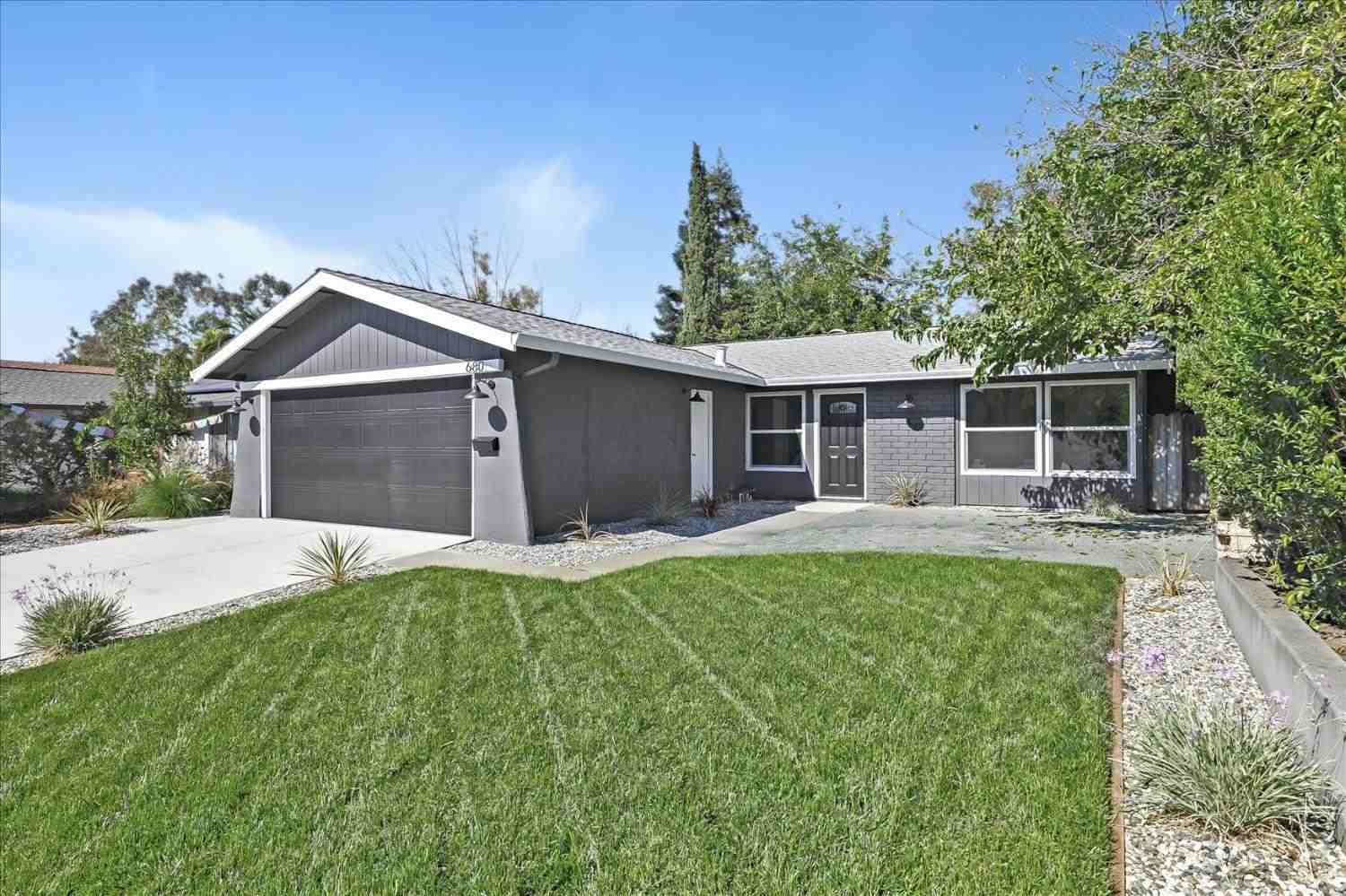
I have operated my brokerage, Douglas & Co. R.E., out of 1907 Market Street in San Francisco for years. Over my three decades in the business, I have closed properties across the entire spectrum of the Bay Area. Recently, I facilitated the sale of an investment property on Barrett Ave in Richmond that closed for $680,000, managed the sale of a residential asset on 31st Ave in San Francisco that closed for $2,600,000, and handled distressed property sales in Benicia closing at $100,000.
What the new FinCEN rule means for our local market is that every single one of those transactions—regardless of the massive price differences—would be subject to heavy federal scrutiny if purchased today with cash through an LLC or trust.
The San Francisco Bay Area is heavily driven by tech wealth, international investment, and sophisticated multi-family real estate syndications. It is incredibly common for my clients to utilize LLCs to limit their personal liability, or to use trusts for estate planning purposes. Moving forward, the velocity of these transactions will be tested. Major title companies like First American and Independence Title have already updated their internal compliance systems. They are acting as strict gatekeepers; if an investor refuses to provide the Social Security numbers and driver’s licenses of their LLC’s 25% stakeholders, the title company will unilaterally halt the closing. There is no opting out.
If you are planning an acquisition strategy for Q2 2026 and beyond, preparation is your best asset. Here is how you can ensure your next transaction does not fall apart at the 11th hour:
The 2026 FinCEN Residential Real Estate Rule represents a massive paradigm shift. It is the culmination of a decade of investigative journalism, government task forces, and legislative maneuvering aimed at purging illicit funds from the American housing market. While it adds a layer of administrative friction for legitimate investors seeking liability protection through LLCs and trusts, understanding these rules is simply the new cost of doing business in a premium market like the Bay Area.
If you are looking to navigate this new landscape, whether you are seeking an owner-occupied home or looking to expand an investor multi-family portfolio, you need a broker who understands both the micro-economics of Bay Area neighborhoods and the macro-regulatory environment. Let’s ensure your next transaction is as seamless and profitable as possible.
Contact my office at (415) 518-2589 or visit me at 1907 Market St, San Francisco, CA. Let’s get to work.
For transparency and to verify the research provided in this post, please reference the following sources:
Subscribe to our newsletter and never miss the let latest articles, blogs, and actionable info in business effectively.
 Optimized by Seraphinite Accelerator