

Accurate Home Valuation San Francisco vs Zillow


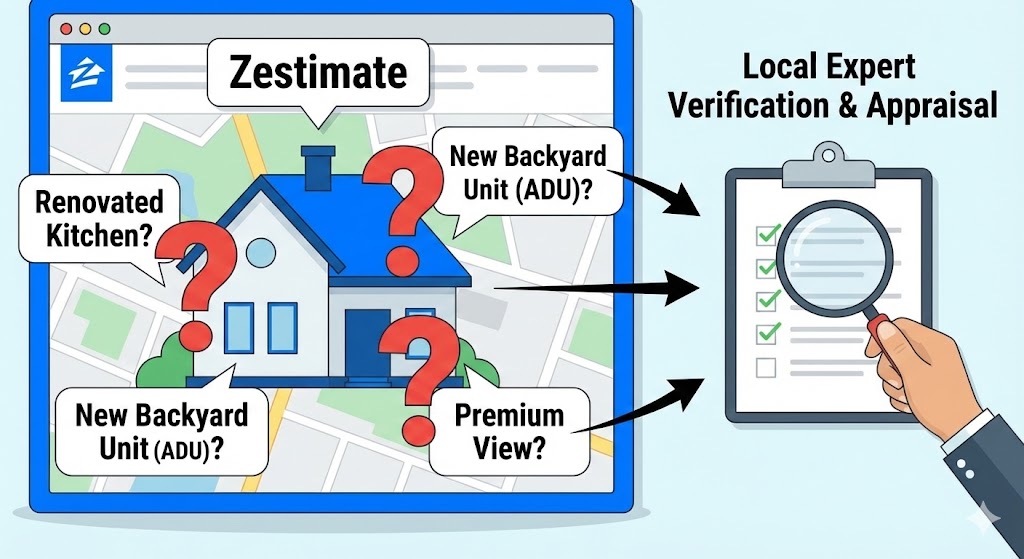
When you type your address into Zillow to see what your home is “worth,” you’re using something called a Zestimate — Zillow’s automated home value estimate. But here’s the truth: a Zestimate is only a starting point — not a real valuation. It can miss important things that make your house in San Francisco really worth more (or sometimes less). That’s why getting an accurate home valuation in San Francisco from a local expert makes a BIG difference.
Let’s break this down in a clear, real‑world way.
What Zillow Uses to Estimate Home Value
Zillow’s Zestimate is a computer‑generated estimate of what a home might sell for. It uses large amounts of data, including:
- Public property records (like tax data)
- Past sales in your area
- User‑submitted home info
- Market trends pulled from MLS and public sources
Zillow says its algorithm is very advanced and uses machine learning — but that doesn’t mean it’s perfect. It’s not an appraisal and can’t replace professional valuations.
Important point: Zillow gets much of its data from public records, and those records don’t always contain the real details about your home’s upgrades or unique features. That’s where human valuation beats a computer.
Why Zillow’s Estimates Can Be Wrong
Before we get into the San Francisco details, let’s talk about why Zillow’s estimates aren’t always accurate — even in the best markets.
1. They Can’t See What’s Inside
Zillow doesn’t walk through your house. It doesn’t know:
- If you renovated the kitchen last year
- If you added an extra bathroom
- If you built a permitted backyard unit
All those things can increase your home’s real market value, but Zillow may not know about them if they aren’t in public records.
2. Outdated or Incomplete Data
Public records sometimes lag behind reality. If you remodeled your home but the assessor’s office hasn’t updated its data, Zillow won’t include it.
3. It Doesn’t Fully Understand Local Trends
Zillow’s model uses broad data — often at the county or ZIP code level — to determine home values. That means it might use sales and trends from similar neighborhoods that don’t really match your exact location. This issue matters more in places like San Francisco, where one block can be worth way more than the next.
4. It’s a Computer, Not a Person
A Zestimate is a statistical guess based on data patterns. It can be good, but it can’t think like a local expert. Zillow itself admits that a Zestimate is not an official appraisal and shouldn’t be used in place of one.
San Francisco: A Market Where Local Value Matters
San Francisco’s housing market is complex. Prices here don’t behave like in most U.S. cities because of things like:
- Limited new construction
- Big differences between neighborhoods
- Unique features such as views, hills, and historic charm
- Strong demand from tech workers
- Zoning quirks and city build permits
All of these can make a huge difference when it comes to home value — and Zillow’s algorithm cannot fully capture them.
Before we get into the San Francisco details, let’s talk about why Zillow’s estimates aren’t always accurate — even in the best markets.
Example: San Francisco’s Market Today
According to Zillow’s Home Values data, the typical home value in San Francisco is about $1.25M, having grown modestly in the past year.
But here’s the thing: Zillow is averaging all these homes together. That number doesn’t reflect the real value of very unique houses — ones with views, upgrades, or legal rental units — which often sell for hundreds of thousands more.
Zillow vs Human Appraisal: What’s the Real Difference?
Here’s a simple way to think about it:
Zillow = Calculator
Human Appraiser/Agent = Person Who Knows the Neighborhood
A Zillow Zestimate crunches numbers. A human valuation considers context, nuance, and experience.
Zillow Doesn’t See Unique Things Like:
- Unpermitted vs. Permitted Units: In San Francisco, many homes have bonus space — like attics, garages turned into rooms, or backyard cottages — that Zillow might not count correctly. A human appraisal checks permits and real usable space.
- View Premiums: Homes with Golden Gate or Bay views often sell much higher than similar houses without views — Zillow can’t accurately weigh how much a view adds. This requires local market knowledge.
- Renovation Quality: Zillow looks at square footage and room count, but it doesn’t know whether the kitchen has high‑end finishes or the bathrooms were completely remodeled.
- Street Appeal or Condition: Zestimates don’t walk the property or see curb appeal, landscaping, or recent upgrades.
Even Zillow’s team says its estimate isn’t an appraisal — and that you should work with a professional appraiser or agent for best accuracy.
San Francisco Traits Zillow Often Misses
Now let’s talk about specific things in San Francisco that Zillow often misses — but a local valuation will catch.
1. Permitted In‑Law (Accessory) Units
San Francisco is known for ADUs (Accessory Dwelling Units) and in‑law units. These spaces can add significant rental income potential or living value — but Zillow might not include them if public records don’t reflect them. A human valuation checks permits and rental potential.
2. Views (Bay, Golden Gate, City Skyline)
A view can add tens or hundreds of thousands of dollars to a home in San Francisco, but Zillow’s algorithm has no eye — it just sees numbers. A local agent knows how much The View on a particular street is worth to buyers.
3. Neighborhood Nuances
San Francisco has pockets where prices swing wildly — think:
- Russian Hill vs. Tenderloin
- Pacific Heights vs. Outer Richmond
Zillow treats data more broadly, but a local valuation breaks values down to blocks — not ZIP codes.
4. Recent Renovations
If you updated your plumbing, electrical systems, or added eco‑friendly upgrades, Zillow won’t know unless that info is in public records. A real appraisal will spot them.
5. Market Momentum
Right now, San Francisco’s market has some unique traits: high tech demand, limited inventory, and luxury segments rising faster than lower tiers. Zillow’s data lags and smooths trends — a local agent sees what’s actively selling this week.
What to Ask for Instead
Here are the tools you should use:
1. Comparative Market Analysis (CMA)
A CMA is a report from a local real estate agent that looks at real sales of homes like yours in your neighborhood within the last 90 days.
Benefits:
- Current market pricing
- Neighborhood specifics
Adjustments for upgrades and condition
2. Professional Home Appraisal
Appraisers physically inspect the home and consider:
- Structure and condition
- Recent improvements
- Market demand
- Comparable sales
This is what lenders often require — and it’s real, court‑accepted value.
3. Consult a Local Realtor
A Realtor can give insights into buyer behavior, what features are trending, and how your home compares to others currently selling.
Bottom Line: Zillow Isn’t Wrong — It’s Just Not Enough
Zillow’s Zestimate is a useful snapshot. It gives you a general idea of value, but it doesn’t replace professional insight — especially in a unique market like San Francisco.
Here’s a simple rule:
Use Zillow for a quick check, use a pro for the real answer.
Zillow is free and fast. But an accurate valuation — especially in San Francisco — requires local knowledge, inspection, and context that only trained professionals can provide.
Ready to Know Your San Francisco Home’s True Value?
If you want a precise valuation tailored to your property — not an estimate based on algorithms — it’s time to connect with a local expert who understands San Francisco’s market inside and out. Real data, real home visits, and real pricing precision make all the difference when money is on the line.
Post Tags:
Share This :
Latest Post


Stay updated with insights
Subscribe to our newsletter and never miss the let latest articles, blogs, and actionable info in business effectively.
02/ Related Article
